
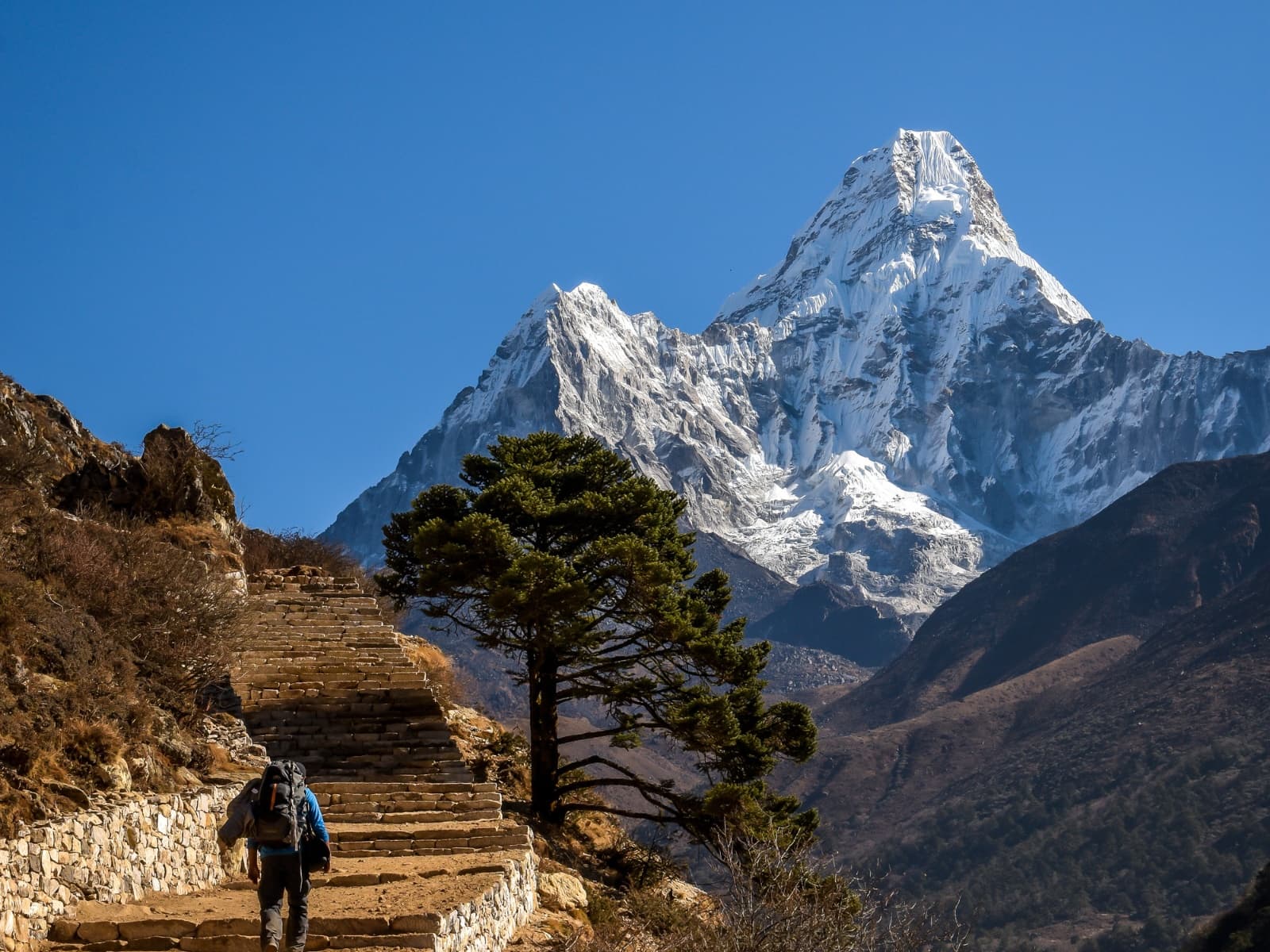
Ama Dablam Base Camp Trek - 10 Days
Destination
Everest Solukhumbu Region
Adventure Type
Trekking Adventures
Difficulty Level
medium
Duration
10 Days
Trip Region
Everest Region
Highest Altitude
4500m
Group Size
1-20+
Season
Autumn & Spring
Ama Dablam Base Camp Trek - 10 Days
Overview
The Ama Dablam Base Camp Trek is a short but beautiful trek in the Khumbu on the Himalayan Range. It starts with a scenic flight to Lukla at 2,860m. From there, the path wanders through the pine forests, crosses suspension bridges and passes through the Sherpa villages until it reaches the Namche Bazaar mountain culture centre at 3,440 m. Daily hikes are of the order of five to six hours long and are associated with gentle ascents leading to alpine meadows and broad valleys.
Acclimatising in Namche allows trekkers to safely adjust to altitude while seeing some of the colourful markets and monasteries. The trek subsequently passes through Kyangjuma and Pangboche, where one gets to witness the real Sherpa lifestyle and panoramic views of Everest, Lhotse, and Ama Dablam.
The highlight is the ascent to Ama Dablam Base Camp at 4,600 m, where the pyramid-shaped mountain looms way above the valley. Cultural immersion occurs in Sherpa villages and sacred monasteries and on trails lined with prayer flags. Altitude changes determine the rhythm of the trek: on easy valleys it turns into a good climb to the base camp. Nights are spent in friendly teahouses and very modest rooms, and warm hospitality soothes trekkers after long days. In Kathmandu, modern hotels provide a sense of relaxation, balancing the pre- and post-trek adventure.
Full board meals are available: Nepali dal bhat, Sherpa specialities, and the typical international dishes. Tea and coffee breaks help to bring warmth and energy to the cool air of the mountains.
Licensed guides, porters,s and medical support are a guarantee of safety and confidence. This 10-day trek is a rewarding and adventurous trek in the Himalayas, which combines natural grandeur with cultural depth.
Trip Highlights
- Scenic flight to Lukla (2,860 m) after a drive from Kathmandu to Ramechhap, followed by a gentle trek to Phakding (2,610 m).
- Trek from Phakding to Namche Bazaar (3,440 m), crossing suspension bridges over the Dudh Koshi River, with vibrant Sherpa villages and the first views of Everest.
- Acclimatization day in Namche Bazaar, with a short hike to Everest View Hotel (3,880 m), offering panoramic scenery of Everest, Lhotse, and Ama Dablam.
- Trek from Namche Bazaar to Kyangjuma (3,570 m). The trail passes rhododendron forests and offers wide Himalayan vistas.
- Trek from Kyangjuma to Pangboche (3,985 m). The route passes Tengboche Monastery (3,860 m), a spiritual center of Khumbu.
- Hike from Pangboche to Ama Dablam Base Camp (4,600 m) and return. The highlight is standing beneath Ama Dablam’s soaring pyramid peak.
- Trek from Pangboche back to Namche Bazaar (3,440 m). The trail retraces through Tengboche and Somare, with cultural immersion in Sherpa settlements.
- Trek from Namche Bazaar to Lukla (2,860 m). The long day passes through suspension bridges, pine forests, and lively villages, completing the circuit.
- Flight from Lukla to Ramechhap and drive to Kathmandu (1,400 m), returning to city comforts after the mountain adventure.
Itinerary
Package Cost Details
Included In Package
- Private airport transfers in a comfortable vehicle for smooth arrivals and departures
- Accommodation in teahouses or hotels along the trekking route (twin‑sharing basis)
- Full board meals (breakfast, lunch, and dinner), including seasonal fruits after dinner
- Experienced English‑speaking trekking guide providing professional and friendly support
- Porter service included (one porter shared between two trekkers)
- Salaries, equipment, and insurance coverage for guides and porters
- Emergency rescue services (rescue costs to be covered by trekker’s travel insurance)
- A basic first-aid kit is carried by the guide for safety
- Trek completion certificate to commemorate your achievement
- Required permits: Sagarmatha National Park Permit and Khumbu Rural Municipality Entry Permit
- Printed trekking route map to help navigate the trek
- All applicable government taxes and official charges
Excluded In Package
- Travel insurance (recommended to cover high‑altitude trekking and emergency rescues)
- Personal expenses during the trek, including hot showers, device charging, and Wi‑Fi
- Beverages of any kind: tea, coffee, mineral water, soft drinks, alcoholic drinks, etc.
- Personal trekking gear and equipment (boots, jackets, poles, etc.)
- Tips for guides and porters
- Expenses due to unforeseen circumstances such as natural disasters, extreme weather, political issues, or flight delays
- Kathmandu hotel and food expenses before/after trek
- Sightseeing or tours in Kathmandu
Trip Info
Ama Dablam Base Camp 10 Days Itinerary Overview
The Ama Dablam Base Camp Trek is a 10-day trek in the Himalayas that combines dramatic scenery and Sherpa culture. It begins in Kathmandu with a drive to Ramechhap, followed by a flight to Lukla altitude of 2860 m. The first walk from Lukla to Phakding at an elevation of 2,610 meters takes three to four hours by riverside trails and suspension bridges.
From Phakding, there is a six to seven-hour trek to Namche Bazaar at 3,440m through forests of pines and over high bridges. A short acclimatization trek to Everest View Hotel, at 3,880m, takes hikers to beautiful vistas of Everest, Lhotse, and Ama Dablam. Sherpa markets and tea houses are the cultural attractions.
The trail continues to Kyangjuma at 3,570m and then Pangboche at 3,985m, crossing Tengboche Monastery at 3,860m, which is a spiritual centre of Khumbu. The highlight is the trek to Ama Dablam Base Camp at 4 600 m (over six to seven hours to go and back), winding through the alpine meadows with a breathtaking view of the pyramid summit.
The return journey follows the same route back through Pangboche, Namche, and Lukla through some beautiful descents and cultural immersion into Sherpa villages. Flights back to Ramechhap, and a drive to Kathmandu, at an elevation of 1,400m, bring the trek to an end. Accommodation is in teahouses en-route and hotels in Kathmandu, and meals are dal bhat, thukpa, momos, and tea. Gradual acclimatization, licensed guides, and medical support ensure safety so that this trek is a rewarding combination of natural grandeur and cultural depth.
Ama Dablam Base Camp Trek distance and altitude coverage
|
Day |
Route |
Distance |
Duration |
Altitude Gain/Loss |
Sleep Altitude |
|
1 |
Arrival in Kathmandu, transfer to the hotel |
– |
– |
– |
1,400 m |
|
2 |
Drive Kathmandu → Ramechhap, flight to Lukla (2,860 m), trek to Phakding |
~8 km |
3–4 hrs |
–250 m |
2,610 m |
|
3 |
Trek Phakding → Namche Bazaar |
~10–11 km |
6–7 hrs |
+830 m |
3,440 m |
|
4 |
Acclimatization in Namche, hike to Everest View Hotel (3,880 m) and return |
~3–4 km |
3–4 hrs |
+440 m / –440 m |
3,440 m |
|
5 |
Trek Namche Bazaar → Kyangjuma |
~5 km |
4–5 hrs |
+130 m |
3,570 m |
|
6 |
Trek Kyangjuma → Pangboche via Tengboche Monastery |
~9 km |
5–6 hrs |
+415 m |
3,985 m |
|
7 |
Hike Pangboche → Ama Dablam Base Camp (4,600 m) and return |
~10 km (round trip) |
6–7 hrs |
+615 m / –615 m |
3,985 m |
|
8 |
Trek Pangboche → Namche Bazaar |
~12 km |
6–7 hrs |
–545 m |
3,440 m |
|
9 |
Trek Namche Bazaar → Lukla |
~18 km |
7–8 hrs |
–580 m |
2,860 m |
|
10 |
Flight Lukla → Ramechhap, drive to Kathmandu, departure or onward activities |
– |
– |
–1,460 m |
1,400 m |
Permits and Expenses Needed for the Ama Dablam Base Camp Trek
To trek to Ama Dablam Base Camp, trekkers must get two important permits, i.e., Sagarmatha National Park Entry Permit and Khumbu Pasang Lhamu Rural Municipality Permit. These fees add to conservation, safety, and development of the Sherpa community in the Khumbu region.
Sagarmatha National Park Entry Permit
Access to the Everest region requires the Sagarmatha National Park permit. This sum helps with the conservation of the forests, wildlife, glaciers, and trail infrastructure in this WWF World Heritage Site.
- Foreigners: NPR 3,000 per person (approx. USD 23)
- SAARC nationals: NPR 1,500 per person
- Nepali citizens: NPR 100 per person
- Children under 10: Free
Permits can be obtained from the Nepal Tourism Board office in Kathmandu or at the park entry checkpoint at Monjo.
Khumbu Pasang Lhamu Rural Municipality Permit
This local permit gives them an assurance that the fees go directly to the infrastructure, trail maintenance, and community development in the Khumbu region. It has replaced the old TIMS card requirement.
- Foreigners: NPR 2,000 per person (approx. USD 15)
- SAARC nationals: Same rate as foreigners
- Children under 10: Free
This permit is issued in Lukla or Monjo.
TIMS Card (Trekkers’ Information Management System)
Unlike the Annapurna Circuit, the Everest region, including Ama Dablam Base Camp, doesn't requirea TIMS card. The Khumbu Pasang Lhamu Rural Municipality permit plays this role.
Summary
For the Ama Dablam Base Camp Trek (10 Days), trekkers need:
- Sagarmatha National Park Entry Permit (NPR 3,000 for foreigners, NPR 1,500 for SAARC nationals).
- Khumbu Pasang Lhamu Rural Municipality Permit (NPR 2,000 for foreigners and SAARC nationals).
- No TIMS card required.
These permits and fees are necessary for the trek and help to manage tourism, conserve natural resources, and provide income to Sherpa communities that live along the Ama Dablam trek.
Trip Cost of the Ama Dablam Base Camp Trek (10 Days) Package 2026/2027
|
Group Size |
Price Per Person (USD) |
|
10 persons | |
|
10 – 20 persons | |
|
21+ persons | |
|
Single Supplement |
Note
- Prices are calculated on a per‑person basis.
- For a group of 10 trekkers, the cost is fixed on a per‑capita rate.
- For larger groups of 21 or more people, a discounted rate applies per person.
- An additional surcharge is applicable for private accommodation
Best Time to Trek Ama Dablam Base Camp
Spring (March to May) | Ideal for Trekking
Spring brings cool mornings, blooming rhododendrons, and pleasant weather up at higher elevations. Visibility is excellent with the pyramid peaks of Ama Dablam, Everest, and Lhotse gleaming clearly in blue skies.
|
Month |
Day Temp (°C) |
Night Temp (°C) |
Precipitation |
Weather |
Snowfall |
|
March |
0 to 10 |
-5 to -10 |
40–60 mm |
Cold mornings, clear days |
Light at higher ridges |
|
April |
5 to 12 |
-2 to -8 |
60–80 mm |
Mild rhododendrons are blooming |
Rare |
|
May |
8 to 15 |
0 to -5 |
80–90 mm |
Warm, clear skies, stable trails |
Minimal |
Autumn (September to November) | Best Season
Autumn is said to be the best time for the Ama Dablam Base Camp. September starts with light rain, and skies soon become clear. October brings crisp air and calm weather, while November comes with colder nights and the unmatched Himalayan visibility.
|
Month |
Day Temp (°C) |
Night Temp (°C) |
Precipitation |
Weather |
Snowfall |
|
September |
8 to 12 |
-2 to -8 |
100–120 mm |
Clear skies, occasional showers |
Light at altitude |
|
October |
5 to 12 |
-5 to -10 |
60–80 mm |
Stable, crisp skies, clear views |
Rare |
|
November |
0 to 8 |
-8 to -14 |
30–50 mm |
Cold nights, excellent visibility |
Begins at high ridges |
Less Favorable Seasons
- Summer Monsoon (June–August): Heavy rain, muddy trails, landslides, and poor visibility make trekking difficult.
- Winter (December–February): Freezing conditions, snowbound paths, and icy winds often make the base camp approach risky.
Conclusion
The Ama Dablam Base Camp Trek is therefore best undertaken during the Spring (March - May) and Autumn (September - November). These seasons offer the best trekking experience with stable weather, colorful landscapes, and breathtaking views of Ama Dablam and its surrounding peaks.
Packing List for the Ama Dablam Base Camp Trek (10 Days)
General Essentials
- Three‑season sleeping bag (rated for –10°C, suitable for nights up to 4,600 m)
- Down jacket (medium‑heavy for cold evenings at Pangboche and Base Camp)
- Daypack 30–40L with rain cover
- Trekking poles (helpful for suspension bridges and steep descents)
- Water purification tablets/filter (for streams and teahouse refills)
- Headlamp with spare batteries (for early morning hikes and teahouse use)
Upper Body
- Sun hat or cap (UV protection at altitude)
- Warm beanie/knitted hat
- UV‑protected sunglasses (category 3–4 for snow glare at Base Camp)
- Buff/neck gaiter (for dust, wind, and cold protection)
Torso Layers
- Technical base layers (thermal, moisture‑wicking)
- 2 short‑sleeve trek shirts
- 2 long‑sleeve trek shirts
- Fleece jacket/pullover
- Waterproof shell jacket (windproof for Pangboche and Base Camp)
- Insulated mid‑layer jacket (for cold nights at 4,600 m)
Lower Body
- Thermal leggings/base layer
- 2 hiking pants (quick‑dry)
- Hiking shorts (for lower valley days around Phakding and Namche)
- Comfortable teahouse pants
- Rain/snow shell pants (for unpredictable weather at higher altitudes)
- Hands
- Liner gloves
- Insulated waterproof gloves (important for cold mornings at Base Camp)
Feet
- Warm wool socks (3–4 pairs)
- Hiking socks and liners
- Waterproof trekking boots (broken‑in, with ankle support)
- Casual shoes/slippers (for teahouse evenings)
- Undergarments & Sleepwear
- Quick‑dry underwear
- Sports bras (for women)
- Thermal sleepwear (essential for nights at Pangboche and Base Camp)
- Medicals & Personal Care
- First aid kit, altitude medication, pain relievers
- Oral rehydration salts (for hydration at altitude)
- Sunscreen SPF 50+, lip balm SPF (UV is strong above 3,500 m)
- Menstrual products (for women)
- Hand sanitizer, wet wipes, toiletries
- Personal medications (prescribed)
- Electronics
- Power bank (10,000–15,000 mAh, charging is costly at altitude)
- Camera/smartphone with extra memory cards
- Adapter plug (Nepal standard: Type C/D/M)
- Miscellaneous
- Trekking duffel bag
- Lightweight towel
- Notebook and pen
- Snacks: energy bars, nuts, chocolates (extra calories for Base Camp day)
- Reusable water bottle/hydration bladder (2–3L capacity)
- Small lock (for duffel bag security)
- Lightweight book/Kindle
- Equipment and Extras Provided by the Company
- Down jacket (loaned for trek)
- Sleeping bag (loaned for trek, rated for Ama Dablam conditions)
- Trekking duffel bag (70L, for porter use)
- Ama Dablam Base Camp trekking route map
- Trekking T‑shirt (souvenir)
- Appreciation certificate after trek completion
- First aid kit with oximeter for altitude monitoring
- Basic medical support during the trek
- Can You Trek the Ama Dablam Base Camp Solo?
- Trekking to Ama Dablam Base Camp without a guide is no longer legally possible for foreign visitors. Nepal came up with a rule in 2023 that any trekker should hire licensed guides through registered agencies. The regulation was aimed at enhancing safety, mitigating accidents in high altitude areas, and ensuring that visitors would receive support in terms of culture and logistics.
- The route itself goes to 4,600 metres with steep ascents, suspension bridges, and thin air, which can induce altitude sickness. While the trek is shorter than Everest Base Camp, it is still demanding on climbers and unpredictable mountain weather, where solo trekkers would be at risk without professional assistance. Guides, for their part, are trained to control the acclimatization schedules, as well as monitor the health of the travelers, and should respond quickly to emergencies, making the journey safer and more reliable. Along the way, they also enhance the experience by explaining Sherpa traditions, monasteries, prayer flags, and village life by way of Namche Bazaar, Tengboche, and Pangboche on the route. Porters provide additional support by carrying loads, shoulder the load, and save your trekkers' energy for the base camp climb.
- Walking with a group also gives mental reassurance, companionship, and shared motivation, which they need to make a challenging climb a more pleasant adventure. Trekking in a group enhances the experience - turning a demanding hike into a fulfilling trek beneath the iconic pyramid peak of Ama Dablam.
- What are the Meals and Accommodation Like in the Ama Dablam Base Camp Trek?
- Meals and accommodation on the Ama Dablam Base Camp trek combine basic comforts with authentic Himalayan hospitality.
- In Kathmandu:
- Trekkers typically stay in 3-star hotels with twin or double-occupancy rooms. The breakfast is included on the way to the trek and on the return journey as well.
- Along the Trek:
- Accommodation is in the standard Sherpa teahouses. Rooms are very simple, with twin-sharing beds and basic bedding.
- At lower altitudes (Phakding, Namche), some lodges may offer attached bathrooms and slightly better facilities.
- At higher villages (Tengboche, Pangboche, Ama Dablam Base Camp area), bathrooms are shared, and facilities are more basic due to remoteness.
- Atmosphere:
- Teahouses offer warmth, coziness, and Sherpa hospitality.
- Evenings are often an occasion for communal eating, as the trekkers gather around wood stoves to tell themselves stories and enjoy the atmosphere of the mountain.
- Meals
- Full board meals are provided throughout the trek: breakfast, lunch, and dinner daily.
- Traditional Nepali dishes like dal bhat (rice, lentils, vegetables) are supplemented by Sherpa and Tibetan‑inspired meals such as noodles, soups, pasta, momos, thukpa, eggs, and Tibetan bread.
- Tea and coffee are served three times daily, and fresh seasonal fruit is offered after dinner to keep trekkers energized.
- At higher altitudes (Pangboche and Base Camp), meals are simpler but hearty, designed to provide warmth and calories for demanding trekking days.
-
Notes
- Meals include both Nepali and Sherpa/Tibetan dishes, with occasional international options in Namche Bazaar.
-
Fresh fruit is served after dinner along the trail.
-
Tea and coffee are provided three times daily.
-
Accommodation is on a twin/double sharing basis, with attached bathrooms available in lower villages, and shared bathrooms at higher altitudes.
- This arrangement guarantees that trekkers will have good food and comfortable accommodation and will be able to experience the cultural richness of the Khumbu region, the hospitality of the Sherpas, and breathtaking views of the pyramid peak of Ama Dablam.
- Visa and Entry Requirements for the Ama Dablam Base Camp Trek (10 Days)
- Nepal Entry Visa
- All foreign travelers require a valid Nepal entry visa to participate in the Ama Dablam Base Camp trek. The visa may be obtained in Kathmandu at Tribhuvan International Airport or in advance from Nepali embassies located abroad. A passport with a minimum of six months' validity and a passport-size photo is required.
- 15‑day multiple‑entry visa: USD 30
- 30‑day multiple‑entry visa: USD 50
- 90‑day multiple‑entry visa: USD 125
- Payment is generally by cash, preferably US Dollars, though other major currencies are accepted.
- Trekking Permits
- In addition to the entry visa, trekkers must obtain permits specific to the Everest region:
- Sagarmatha National Park Entry Permit (SNPEP): Required to enter the UNESCO‑listed Sagarmatha National Park. The fee supports conservation of forests, glaciers, wildlife, and trail infrastructure.
- Khumbu Pasang Lhamu Rural Municipality Permit: Introduced in place of the TIMS card, this local permit ensures direct contributions to community development, infrastructure, and trail maintenance in the Khumbu region.
- Local Municipality Fees
- The Khumbu Pasang Lhamu Rural Municipality Permit is collected at checkpoints that are situated in Lukla or Monjo. This system is designed to enable trekkers to make a direct contribution to Sherpa communities, as well as to support the maintenance and upkeep of the route by Ama Dablam, including trail, bridge, and village maintenance.
- Provided by Trekking Company
- All the necessary permits are arranged by the trekking company and are included in the trek package cost. This ensures that they are complying with Nepal's regulations and saves trekkers from paperwork hassles. It means that you can focus on your acclimatization, cultural immersion, and the rewarding experience of standing below the iconic pyramid peak of Ama Dablam.
- Travel Insurance Requirements and Emergency Rescue Coverage for the Ama Dablam Base Camp Trek
- Travel insurance is compulsory to go on the Ama Dablam Base Camp trek. Every participant must carry a policy that covers trekking at high altitudes (up to 4,600 m). While this trek is not across extreme passes such as Cho La, the altitude and steep trails of this trek, along with the unpredictable Himalayan weather, make the trek susceptible to altitude sickness, injuries, and sudden emergencies. Without valid insurance, trekkers are not allowed to participate in the trek.
- A proper insurance policy should include:
- High‑altitude trekking coverage (up to 5,000 m)
- Helicopter rescue and emergency evacuation
- Medical treatment and hospitalization
- Trip cancellations, delays, and repatriation
- Emergency Rescue Operations
- Rescue operations are coordinated mostly from Namche Bazaar, Lukla, or Kathmandu, depending upon the severity of the situation. In cases of emergency, helicopters can access villages such as Pangboche, Tengboche,e or Namche where trekkers can be evacuated quickly to lower altitudes or hospitals in Kathmandu. Guides ensure management of the rescue process, including communication with insurance providers, ensuring timely evacuation and medical support.
- Why Insurance Matters on the Ama Dablam Trek
- Even though Ama Dablam Base Camp is lower in elevation than Everest Base Camp, it is still a trek that involves long days of walking, thin air, and remote terrain where medical facilities are limited. Insurance is a peace of mind - it covers the costs of the expensive helicopter rescues and hospital treatment. It also guarantees that trekkers can enjoy the adventure - standing under the iconic pyramid peak of Ama Dablam - and not worry about unexpected risks.
- Altitude Sickness and Prevention for the Ama Dablam Base Camp Trek
- Altitude sickness is a common issue that is experienced during the Ama Dablam Base Camp trek, since the trail reaches an altitude of 4,600 metres. Even though this trek does not involve extreme passes like Cho La, due to the thinner air and steep ascents, Acute Mountain Sickness (AMS) may occur. Professional guides carry medical kits that include oximeters to monitor oxygen levels and detect early signs of AMS. They also monitor the physical and mental status of the trekkers, promoting slow walking, good hydration, well-balanced meals, and rest days as necessary.
- The best prevention is slow acclimatization. Trekkers stay at villages, including Namche Bazaar and Pangboche, for a night to acclimatize their bodies to the altitude before reaching the base camp. If symptoms of AMS appear (headache, nausea, or dizziness), then being safe the only response is to descend immediately. Guides know how to deal with emergencies and can organize helicopter evacuation from villages such as Pangboche or Namche to hospitals in Kathmandu.
- Travel insurance with high altitude trekking and helicopter rescue is also a necessity. It provides a safety net in case altitude emergencies, sudden changes in weather, or unexpected accidents occur. With the right acclimatization, appropriate guidance, and understanding of the dangers, trekkers can surmount the challenge of altitude and have a safe and rewarding trip below the stunning pyramid peak of Ama Dablam.
- Personal Expenses to Budget For on the Ama Dablam Base Camp Trek
- Trekkers are advised to budget for personal spending that is not included in the package. These costs are small but are a necessity for comfort and enjoyment. While hiking, many purchase additional snacks (chocolate, nuts, or energy bars). Bottled or boiled water is available on the train,l but most trekkers use purification tablets. Teahouses sell tea, coffee, and soft drinks. Namche Bazaar has bakeries and even alcoholic beverages. Since these items are not included in them, plan separately for them.
- Teahouses provide basic accommodation, with additional services such as Wi-Fi, hot showers, rs and charging devices available at an extra cost. Prices increase with height, so expect to pay more in Pangboche or near base camp. Souvenir shopping is another expense. Namche Bazaar and Pangboche sell prayer flags, yak wool clothes, Sherpa handicrafts, etc. Donations to monasteries also cost money, despite their cultural value.
- It is the norm to give tips to guides and porters, so you must include that in your budget. Carry small notes of Nepalese Rupees with you because ATMs are not available or they are unreliable in remote areas. By budgeting money for these personal expenses, trekkers avoid the financial stress and have a smoother, more rewarding trek.
- Why Trek the Ama Dablam Base Camp with Us?
- Trekking to Ama Dablam Base Camp with us is a bundle of the Himalayan adventure, Sherpa culture, and the awesome feeling of standing at the foot of an iconic peak. After you're dropped off in Lukla by air, our licensed guides keep you safe, well-paced, and informed from your first step to the last climb to base camp.
- We provide a well-designed 10-day itinerary with a balance of acclimatization and comfort. The trail features constant climbing, easy downhill, and time to explore local villages. Every day is planned in such a way that you get maximum safety and cultural immersion, and hence, don't just experience the trail, but the heart of the Himalayas.
- Our departures are guaranteed,d and scheduling is flexible, which makes it easy to join whether you are a solo traveler or part of a larger group. The package is all-inclusive, for permits (Sagarmatha National Park, Khumbu Municipality), accommodation, meals, guides, and porters. This frees you up to just concentrate on the trek and the stunning views of Ama Dablam, Everest, and Lhotse, without having to worry about the logistics.
- For those who look for a deeper cultural experience, we can organize visits to the Tengboche Monastery, cultural walks to Sherpa villages, or even meditation sessions with some monks. Optional helicopter sightseeing flights over Ama Dablam and Everest are also available at extra cost, which promise a once in a lifetime aerial perspective of the Himalayas.
- Our agency has earned a good reputation for professionalism, care, and detail. We are well-equipped to deal with groups of all sizess and we have assistant guides and porters to ensure smooth logistics, personal attention, and safety all the way during the trek.