
Everest Three Passes Trekking: 19 Days
Destination
Everest Solukhumbu Region
Adventure Type
Trekking Adventures
Difficulty Level
hard
Duration
1 Days
Trip Region
Everest Region
Highest Altitude
3445m
Group Size
1-20+
Season
Autumn & Spring
Everest Three Passes Trekking: 19 Days
Overview
The Everest Three Passes Trek is an exciting road trip through the highlands in the Himalayas and through the Sherpa culture. This 19-day adventure is a link between Everest Base Camp and three dramatic passes. It offers a breathtaking scenario with unmatched panoramic mountain views.
The trek starts with a flight to Lukla at an altitude of 2,860 m: the minimum altitude of the trek. Trails lead through suspension bridges, pine forests, and colorful Sherpa villages, a perfect blend of nature and culture.
Daily walks are on average between five and seven hours, with gradual ascents and difficult high altitude crossings. Renjo La, Cho La, and Kongma La pass each rise more than 5000 m, with Kongma La reaching a maximum altitude of 5535 m.
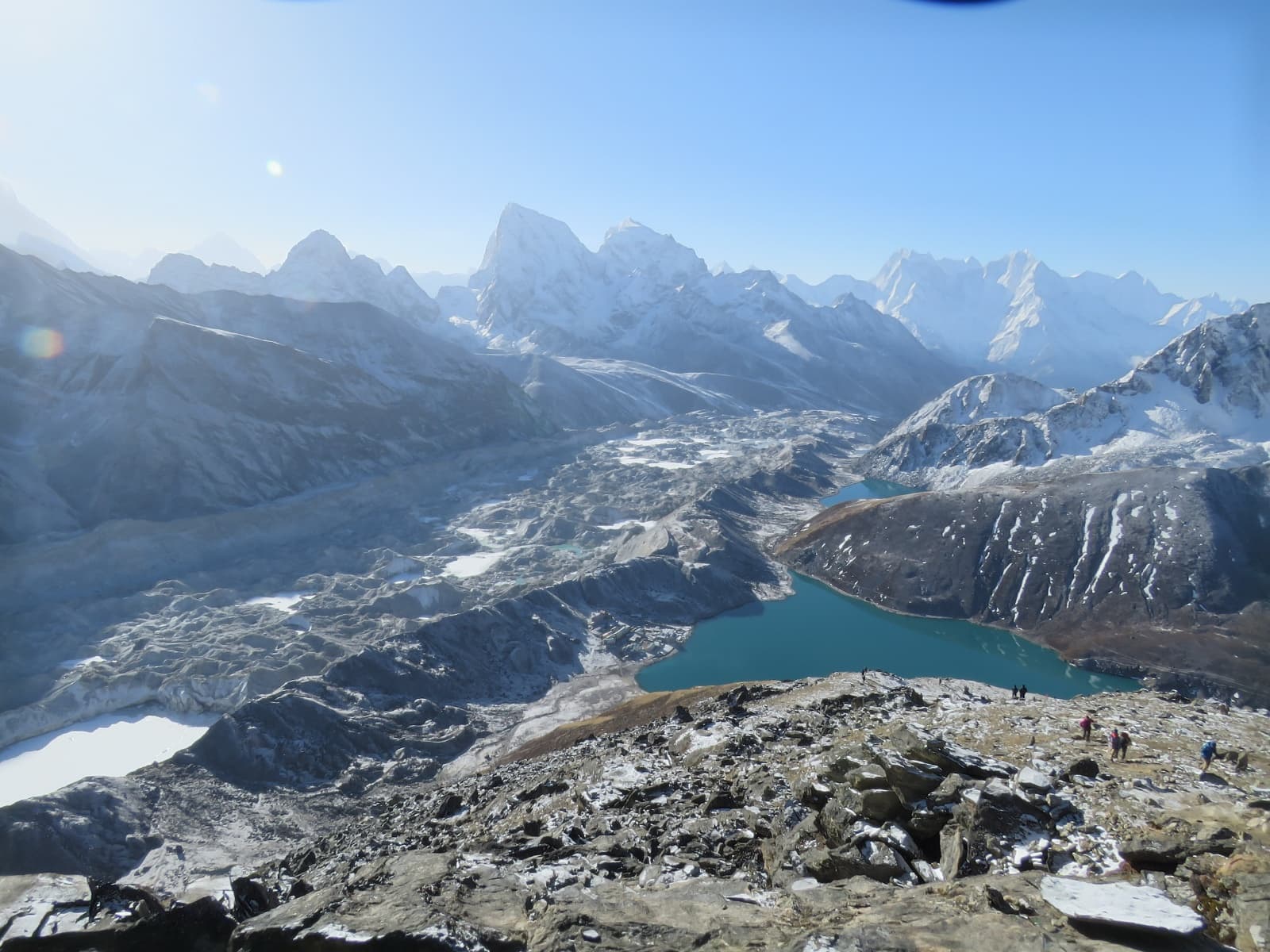
Highlights include the sweeping vistas of Gokyo Ri, the glacier setting of Everest Base Camp at the elevation of 5,364 m, and Kala Patthar boasting the sunrise views at the elevation of 5,545 m. Prayer flags, icy trails, and sacred monasteries give the experience spiritual plus cultural richness.
Accommodation is available in teahouses on the trail as well as in hotels in Kathmandu before and after the trek. Meals are full board with Nepali dal bhat, Sherpa dishes, and tea or coffee every day. Licensed guides, porters, and medical support provide safety with confidence during this challenging trek, but a rewarding one.
Trip Highlights
- Scenic flight to Lukla, gateway to the Everest region, and trek through Phakding villages.
- Trekking to Namche Bazaar with suspension bridges, pine forests, and vibrant Sherpa settlements.
- Acclimatization day in Namche with a hike to the Everest View Hotel for panoramic Himalayan scenery.
- Trekking to Thame and Lumde, exploring monasteries and traditional Sherpa culture along the trail.
- Crossing Renjo La Pass (5,360 m) to reach Gokyo, with stunning views of Everest and Cho Oyu.
- Acclimatization hike to Gokyo Ri (5,357 m) offering sweeping vistas of turquoise lakes and glaciers.
- Trekking across Cho La Pass (5,420 m) to Dzongla, with icy trails and dramatic mountain backdrops.
- Journey to Lobuche and Gorakshep, leading to the iconic Everest Base Camp (5,364 m) experience.
- Sunrise hike to Kala Patthar (5,545 m) for breathtaking close-up views of Everest and surrounding peaks.
- Crossing Kongma La Pass (5,535 m), the highest of the three passes, with challenging altitude exposure.
- Trekking to Chukung and Tengboche, visiting monasteries, and enjoying spiritual depth in Sherpa culture.
- Return through Namche Bazaar and Lukla, completing the circuit with cultural immersion and scenic descent.
Itinerary
Package Cost Details
Included In Package
- Private airport transfers in a comfortable vehicle for hassle‑free arrivals and departures
- Accommodation in 3‑star hotels in Kathmandu and teahouses along the trekking route (twin‑sharing basis)
- Full board meals during the trek (breakfast, lunch, and dinner), with seasonal fruits served after dinner
- Experienced, English‑speaking licensed trekking guide providing professional support and cultural insights
- Porter service included (one porter shared between two trekkers)
- Salaries, equipment, and insurance coverage for guides and porters
- Emergency rescue coordination services (rescue costs covered by trekker’s travel insurance)
- A basic first‑aid kit carried by the guide for safety monitoring
- Trek completion certificate to celebrate your achievement of crossing three passes
- Required permits: Sagarmatha National Park Entry Permit and Khumbu Pasang Lhamu Rural Municipality Permit
- Printed trekking route map for reference during the trek
- All applicable government taxes and official charges
Excluded In Package
- Travel insurance (mandatory for high‑altitude trekking and emergency helicopter evacuation)
- Personal expenses during the trek, including hot showers, device charging, and Wi‑Fi at teahouses
- Beverages of any kind: tea, coffee, mineral water, soft drinks, alcoholic drinks, etc.
- Personal trekking gear and equipment (boots, jackets, poles, sleeping bags, etc.)
- Tips for guides and porters (at trekkers’ discretion)
- Expenses due to unforeseen circumstances such as natural disasters, extreme weather, political unrest, or flight delays (especially Lukla flights)
- Kathmandu hotel and food expenses before/after the trek (outside the package)
- Sightseeing or cultural tours in Kathmandu are not included in the trekking package
Trip Info
Everest Three Passes Trek 19 Days Itinerary Overview
The trek starts in Kathmandu with arrival, orientation, and sightseeing before the preparations for the further trip are completed. A drive to Ramechhap and a short flight to Lukla at 2,860 m introduces the trekkers to the Khumbu region. The first walk to Phakding takes about 3-4 hours, and it follows riverside trails and Sherpa villages.
From Phakding, the trekkers climb to Namche Bazaar at an altitude of 3,440 m. 6-7 hours and 6-7 hours through pine forests and suspension bridges. Namche provides acclimatisation, a hike to Everest View Hotel at 3880m, and fantastic views of Everest, Ama Dablam, and Lhotse. Local bakeries, tea houses, and Sherpa markets add to the cultural experience with both food and tradition.
The trail then continues to Thame and Lumde, with daily walks of 5-6 hours at altitudes above 4,300m. Crossing Renjo La pass (5,360 m) takes you to Gokyo Valley with turquoise lakes and glaciers as the dominant scenery. A hike to acclimatize to the altitude of Gokyo Ri (5,357m) offers sweeping panoramas of Everest, Cho Oyu, and Makalu.
Trekkers then cross Cho La Pass (5,420 m), which is a Challenging day's trek (7-8 hours) with freezing traversal trails and breathtaking backdrops. The path continues to Lobuche at 4,910m, then to Gorakshep at 5,180m, to Everest Base Camp (5,364m). Meals take the form of dal bhat, Sherpa noodles, soups, and Tibetan bread to give energy and customize the culture.
A sunrise hike to Kala Patthar (5,545m) takes 2-3 hours, and rewards trekkers with close-up views of Everest. Crossing Kongma La Pass (5,535m), the highest of the three, takes 7-8 hours of stamina and altitude preparedness. Descending through the monastery of Tengboche, Chunku, Namche Bazaar is a sanctuary of spiritual depth, Sherpas, and the Himalayas.
Accommodation is made in teahouses en route and hotels in Kathmandu before and after. Meals include Nepali dal bhat, Sherpa dishes, thukpa, and momos with tea or coffee three times a day. Licensed guides, porters, and medical support provide safety and confidence during this challenging trek, but a rewarding one.
Everest Three Passes Trekking – 19 Days Outline
|
Day |
Route |
Distance |
Duration |
Altitude Gain/Loss |
|
1 |
Arrival in Kathmandu, transfer to hotel |
5.8 km |
25–30 min drive |
– |
|
2 |
Drive Kathmandu → Ramechhap, flight to Lukla (2,860 m), trek to Phakding |
~8 km |
3–4 hrs |
↑ 286 m / ↓ 250 m |
|
3 |
Trek Phakding → Namche Bazaar |
~10 km |
6–7 hrs |
↑ 830 m |
|
4 |
Acclimatization in Namche, hike to Everest View Hotel (3,880 m) and return |
~3–4 km |
4–5 hrs (optional) |
↑ 440 m / ↓ 440 m |
|
5 |
Trek Namche Bazaar → Thame |
~10 km |
5–6 hrs |
↑ 400 m |
|
6 |
Trek Thame → Lumde |
~8 km |
5–6 hrs |
↑ 620 m |
|
7 |
Trek Lumde → Gokyo via Renjo La Pass (5,360 m) |
~12 km |
7–8 hrs |
↑ 940 m / ↓ 860 m |
|
8 |
Acclimatization in Gokyo, hike to Gokyo Ri (5,357 m) and return |
~4–5 km |
4–5 hrs |
↑ 567 m / ↓ 567 m |
|
9 |
Trek Gokyo → Thangnak (Dragnag) |
~6 km |
3–4 hrs |
↓ 90 m |
|
10 |
Trek Thangnak → Dzongla via Cho La Pass (5,420 m) |
~13 km |
7–8 hrs |
↑ 720 m / ↓ 690 m |
|
11 |
Trek Dzongla → Lobuche |
~8 km |
4–5 hrs |
↑ 80 m |
|
12 |
Trek Lobuche → Gorakshep, hike to Everest Base Camp (5,364 m) and return |
~12 km |
7–8 hrs |
↑ 454 m |
|
13 |
Hike Kala Patthar (5,545 m), trek to Lobuche |
~10 km |
6–7 hrs |
↑ 365 m / ↓ 430 m |
|
14 |
Trek Lobuche → Chukung via Kongma La Pass (5,535 m) |
~11 km |
7–8 hrs |
↑ 625 m / ↓ 1,030 m |
|
15 |
Trek Chukung → Tengboche |
~12 km |
6–7 hrs |
↓ 1,000 m |
|
16 |
Trek Tengboche → Namche Bazaar |
~10 km |
5–6 hrs |
↓ 420 m |
|
17 |
Trek Namche Bazaar → Lukla |
~18 km |
7–8 hrs |
↓ 580 m |
|
18 |
Flight Lukla → Ramechhap, drive to Kathmandu |
– |
6–7 hrs |
↓ 1,536 m |
|
19 |
Departure from Kathmandu |
– |
– |
– |
What are the Permits and Expenses Needed for the Everest Three Passes Trek?
In order to trek the Everest Three Passes route, youneed to get two important permits: the Sagarmatha National Park Entry Permit and the Khumbu Pasang Lhamu Rural Municipality Permit. These fees are used for conservation, safety, and development of the local community.
Sagarmatha National Park Entry Permit
To enter the Everest region, every traveler has to obtain the Sagarmatha National Park permit. This fee supports conservation of forests, wildlife, glaciers, and trail infrastructure of the UNESCO World Heritage Site.
-
Foreigners: NPR 3,000 per person (approx. USD 23)
-
SAARC nationals: NPR 1,500 per person
-
Nepali citizens: NPR 100 per person
-
Children under 10: Free
Permits can be collected at the Nepal tourism board office located in Kathmandu or at the park entry checkpoint located in Monjo.
Khumbu Pasang Lhamu Rural Municipality Permit
Introduced as part of the development of decentralization in Nepal, where this local permit goes directly towards infrastructure, maintaining trails, and community development in the Khumbu region.
-
Foreigners: NPR 2,000 per person (approx. USD 15)
-
SAARC nationals: Same rate as foreigners
-
Children under 10: Free
This permit is issued in Lukla or Monjo and is in place of the old requirement of a TIMS card for the Everest region.
TIMS Card (Trekkers’ Information Management System)
Now, unlike the Annapurna Circuit, the Everest region does not require the TIMS card since the Khumbu Pasang Lhamu Rural Municipality permit has taken its place.
Summary
For the Everest Three Passes Trek, you need:
-
Sagarmatha National Park Entry Permit (NPR 3,000 for foreigners, NPR 1,500 for SAARC nationals).
-
Khumbu Pasang Lhamu Rural Municipality Permit (NPR 2,000 for all foreigners and SAARC nationals).
-
No TIMS card required.
These permits and fees are paramount to the 19-day trek of the Everest Three Passes trek, and help sustain tourism, conserve natural resources, and go directly to Sherpa communities along the trek.
Trip Cost of the 19-Day Everest Three Passes Trek Package 2026/2027
|
Group Size |
Price Per Person (USD) |
|
10 persons | |
|
10 – 20 persons | |
|
21+ persons | |
|
Single Supplement |
Note: Prices are based on per person. For a group of 10 trekkers, the cost is fixed on a per-capita basis. For larger groups of 21 or more people, a discounted rate applies per person. There is an additional surcharge for private accommodation if you request a single room.
Best Time to Trek Everest Three Passes
The best time to trek the Everest Three Passes is Spring (March-May) and Autumn (September-November) when the skies are clear, temperatures are stable, and high passes are easily accessible. The summer monsoon and winter months are not as good because of heavy downpour or snowbound trails.
Spring (March to May) | Ideal for Trekking
Spring provides crisp mornings to lower valleys with blooming rhododendrons and stable weather at the higher altitudes. March may still bring light snow on the passes, while April and May provide warmer days and excellent visibility of Everest, Lhotse, Makalu, and Cho Oyu.
|
Month |
Day Temp (°C) |
Night Temp (°C) |
Precipitation |
Weather |
Snowfall |
|
March |
0 to 10 |
-5 to -12 |
50–70 mm |
Cold mornings, clear days |
Light at high passes |
|
April |
5 to 12 |
-2 to -8 |
70–90 mm |
Mild rhododendrons are blooming |
Rare |
|
May |
8 to 15 |
0 to -5 |
90–100 mm |
Warm, clear skies, stable trails |
Minimal |
Autumn (September to November) | Best Season
Autumn is generally considered the best season for the Everest Three Passes Trek. September starts with some rain but is also rapidly cleared, October brings some crisp air and calm weather, while November brings colder nights but unparalleled views over the Himalayas.Summary.
|
Month |
Day Temp (°C) |
Night Temp (°C) |
Precipitation |
Weather |
Snowfall |
|
September |
8 to 12 |
-2 to -8 |
120–150 mm |
Clear skies, occasional rain |
Light at higher altitudes |
|
October |
5 to 12 |
-5 to -10 |
70–90 mm |
Stable, crisp skies, clear views |
Rare |
|
November |
0 to 8 |
-8 to -15 |
40–60 mm |
Cold nights, excellent visibility |
Begins at high passes |
So, what is the best time to trek the Everest Three Passes?
The Everest Three Passes trek is best in Spring (March-May) and Autumn (September-November). These seasons offer stable weather with clear skies and safer crossing of Kongma La, Cho La, and Renjo La. Summer monsoon (June-August) - It is also the time of heavy rain, slippery trails, and landslides. Winter (December - February) - It is the freezing time with snowbound passes, often making the crossing risky and impassable
Packing List for the Everest Three Passes Trek 19 Days
General Essentials
-
Four-season sleeping bag (rated for -20°C, due to high passes)
-
Down jacket (heavy-duty for extreme cold)
-
Daypack 35–45L with rain cover
-
Trekking poles (essential for steep ascents/descents on passes)
-
Water purification tablets/filter (for glacier streams)
-
Headlamp with spare batteries (for early morning Kala Patthar hike)
Upper Body
-
Sun hat or cap (strong UV protection at altitude)
-
Warm beanie/knitted hat
-
UV-protected sunglasses (category 4 recommended for snow glare)
-
Buff/neck gaiter (for dust and wind protection)
Torso Layers
-
Technical base layers (thermal, moisture-wicking)
-
2 short-sleeve trek shirts
-
2 long-sleeve trek shirts
-
Fleece jacket/pullover
-
Waterproof shell jacket (windproof for passes)
-
Insulated mid-layer jacket (for extreme cold above 5,000 m)
Lower Body
-
Thermal leggings/base layer
-
2 hiking pants (quick-dry)
-
Hiking shorts (for lower valley days)
-
Comfortable teahouse pants
-
Rain/snow shell pants (essential for Cho La and Kongma La crossings)
Hands
-
Liner gloves
-
Insulated waterproof gloves (critical for high passes and Kala Patthar sunrise)
Feet
-
Warm wool socks (4–5 pairs)
-
Hiking socks and liners
-
Waterproof trekking boots (broken-in, high ankle support)
-
Gaiters for snow/mud (especially for Cho La and Kongma La)
-
Casual shoes/slippers (for teahouse evenings)
Undergarments & Sleepwear
-
Quick-dry underwear
-
Sports bras (for women)
-
Thermal sleepwear (essential for nights above 4,500 m)
Medicals & Personal Care
-
First aid kit, altitude medication, pain relievers
-
Oral rehydration salts (for hydration at altitude)
-
Sunscreen SPF 50+, lip balm SPF (UV is intense at 5,000 m+)
-
Menstrual products (for women)
-
Hand sanitizer, wet wipes, toiletries
-
Personal medications (prescribed)
Electronics
-
Power bank (10,000–20,000 mAh, charging is costly at altitude)
-
Solar charger (useful in Gokyo and Lobuche)
-
Camera/smartphone with extra memory cards
-
Adapter plug (Nepal standard: Type C/D/M)
Miscellaneous
-
Trekking duffel bag
-
Lightweight towel
-
Notebook and pen
-
Snacks: energy bars, nuts, chocolates (extra calories for pass days)
-
Reusable water bottle/hydration bladder (2–3L capacity)
-
Small lock (for duffel bag security)
-
Lightweight book/Kindle
Equipment and Extras Provided by the Company
-
Down jacket (loaned for trek)
-
Four-season sleeping bag (loaned for trek)
-
Trekking duffel bag (70L, for porter use)
-
Everest Three Passes trekking route map
-
Trekking T-shirt (souvenir)
-
Appreciation certificate after trek completion
-
First aid kit with oximeter for altitude monitoring
-
Basic medical support during the trek
Can You Trek the Everest Three Passes Trek Solo?
Trekking the Everest Three Passes route on an independent basis is no longer legally possible for foreign visitors. Since 2023, it has become mandatory for you to hire licensed guides from the registered trekking agencies to ensure safety and to reduce the number of accidents in the high Himalayas.
Therefore, the Everest Three Passes 19-Day Trek package is designed for guided groups so you can experience the trail under proper safety, cultural insights, and logistical support. Trekking with guides and organized groups has been the best way to ensure completion of this challenging adventure.
The trek traverses three major high passes - Kongma La 5,535 m, Cho La, 5,420 m, and Renjo La, 5,360 m - which come with the dangers of altitude sickness, icy trails, and unpredictable weather. Professional guides help with acclimatization schedules, navigation through glaciers and steep ridges, and emergency response,making the journey safer, more enjoyable,and mentally rest assured.
What are the Meals and Accommodation Like in the Everest Three Passes Trekking Route?
Meals and accommodation on the Everest Three Passes Trek are all about balancing between basic comforts and experiencing the Himalayas in all its authenticity.
In Kathmandu:
-
You stay in 3‑star hotels with twin or double‑occupancy rooms.
-
Breakfast is included before departure to the trek and upon return.
Along the Trek:
-
Accommodation is in standard Sherpa teahouses. Rooms are simple, with twin‑sharing beds and basic bedding.
-
At lower altitudes (Phakding, Namche), some lodges may offer attached bathrooms and slightly better facilities, and higher altitude lodges in Gokyo, Lobuche, and Gorakshep tend to share. The teahouses offer warmth, cozy ambience, and a nice rest after a day's walk of the day.
Meals
-
Meals are full board. Traditional Nepali dishes like dal-bhat are supplemented by Sherpa and Tibetan-inspired dishes - noodles, soups, rice, pasta, momos, thukpa, eggs, and Tibetan bread.
-
Tea and coffee are offered three times a day, and fresh seasonal fruit is served after dinner to keep you energized and healthy.
Notes:
-
Meals during the trek include both Nepali and Sherpa/Tibetan dishes, along with international options.
-
Fresh fruit is served along the trail after dinner.
-
Tea and coffee are provided three times daily.
-
Accommodation is on a twin/double sharing basis, with attached bathrooms where available in lower villages, and shared bathrooms at higher altitudes.
This arrangement ensures you enjoy reliable meals and comfortable lodging while experiencing the cultural richness of the Khumbu region, with Sherpa hospitality and breathtaking Himalayan views.
Visa and Entry Requirements for the Everest Three Passes Trekking
Nepal Entry Visa
All foreign travelers require a Nepal entry visa to undertake the Everest Three Passes Trek. The visa may be obtained on arrival (from Tribhuvan International Airport at Kathmandu) or in advance from Nepali embassies abroad. A valid passport for at least six months and a passport-sized photo are required for processing.
-
15-day multiple-entry visa: USD 30
-
30-day multiple-entry visa: USD 50
-
90-day multiple-entry visa: USD 125
Cash payments are standard, preferably in US dollars
Trekking Permits
In addition to the entry visa, you need to get permits unique to the Everest region.
-
Sagarmatha National Park Entry Permit (SNPEP): Supports conservation of forests, glaciers, wildlife, and trail infrastructure in the UNESCO-listed Sagarmatha National Park.
-
Khumbu Pasang Lhamu Rural Municipality Permit: Introduced in place of the TIMS card, this fee directly supports local community development, infrastructure, and trail maintenance in the Khumbu region.
Local Municipality Fees
The local fee is paid as a Khumbu Pasang Lhamu Rural Municipality Permit. It is gathered at checkpoints like Lukla or Monjo, which ensures that you make a direct contribution to the communities in which the Sherpas live, as well as maintenance of trails and facilities.
Provided by Trekking Company
The trekking company handles all the necessary permits and includes them in the package cost. This ensures compliance with Nepal’s regulations and offers a hassle-free experience for you on the Everest Three Passes adventure.
Travel Insurance Requirements and Emergency Rescue Coverage for the Everest Three Passes Trekking
The trekking company handles all the needed permits and factors them into the package cost. This ensures adherence to the rules and regulations of Nepal and provides a hassle-free experience on the Everest Three Passes adventure.
Travel insurance is required. Every participant must bring a policy covering trekking at extreme altitudes (above 5,500 m) as the route crosses Kongma La (5,535 m), Cho La (5,420 m), and Renjo La (5,360 m), and visits Everest Base Camp (5,364 m) and Kala Patthar (5,545 m). Without this coverage,you are not legally allowed to participate in the trek.
Rescue operations are coordinated mostly from Namche Bazaar, Lukla, or Kathmandu, depending on the severity of the case. In emergencies, helicopters are employed for evacuation from high-altitude villages such as Gorakshep, Lobuche, or Gokyo. Guides organize the rescue process,s but costs are incurred through your insurance provider.
Medical kits carried by guides, such as oximeters, which monitor oxygen saturation levels at altitude, help identify early signs of acute mountain sickness (AMS) and help reach a timely medical decision. Guides also observe and monitor your physical and mental functioning and encourage them to properly acclimatize, hydrate, and rest to minimize the risks.
A detailed travel insurance plan is, therefore, essential for safety and compliance as well as peace of mind during the trek. It ensures safety from altitude-related emergencies, logistic difficulties, and unpredictable Himalayan weather.
Altitude Sickness and Prevention for the Everest Three Passes Trek
Prevention begins with slow acclimatization, good hydration, and rest days into the trek at Namche Bazaar, Gokyo, and Lobuche. You should refrain from alcohol and smoking, keep up a steady pace, and eat balanced meals every day. These practices allow sustaining energies and reduce the risks of altitude sickness beyond 5000 m altitude.
Guides carry medical kits including oximeters to check the oxygen saturation. If the AMS symptoms occur, the safest course of action is immediate descent. Evacuation can be organized quickly to prevent complications and ensure safety.
Rescue operations are coordinated from Namche Bazaar, Lukla, or Kathmandu, and helicopters are dispatched to high altitude villages such as Gorakshep, Lobuche, or Gokyo. Patients are transferred to the hospitals in Kathmandu for treatment and recovery. Guides the process to ensure the timely medical support and communicates with insurance providers.
With the right acclimatization, expert advice, and knowledge of altitude risks, you can triumph over challenges. This preparation guarantees a safe, rewarding, and memorable experience in which physical endurance and mental strength are strengthened.
Personal Expenses to Budget For on the Everest Three Passes Trekking
You should budget for personal expenses not included in the 19-day package. Typical expenses are for snacks, bottled water, and additional tea or coffee bought on the trail.
Services like Wi-Fi, hot showers, and charging of devices in the teahouses are billed separately, and rates tend to increase with rising altitude. Alcoholic drinks, soft drink and phone calls are also personal expenses. Souvenir shopping in Namche Bazaar, Lukl, or Pangboche requires extra cash, as there are handicrafts, prayer flags,s and Sherpa-made items available in these villages.
Guides and porters' tips are traditional and should be planned for. Carry small denominations of Nepalese rupees since ATMs are not available or are not reliable in remote areas such as Gokyo, Lobuche, or Gorakshep.
Budgeting for these incidentals allows for a smoother trek without any financial stress during the middle of the journey, and enables you to enjoy the Everest Three Passes experience to the fullest with a certain level of peace of mind.
Why trek the Everest Three Passes Trek with Us?
Trekking the Everest Three Passes with us combines the thrill of high altitude trekking with the cultural experience of Sherpa life, with the guidance of professional trekkers.
We offer a custom-made and carefully designed itinerary covering all 19 days with an emphasis on acclimatization and safety. The trek is guided by the local experts who are licensed and also provide invaluable insights into the Sherpa traditions and the Khumbu way of life.
Guaranteed departures and flexible scheduling make it acceptable for groups of all sizes to join. Our all-inclusive package includes permits (Sagarmatha National Park, Khumbu Municipality), domestic flights, accommodation, meals, guides, and porters so that you can also focus on the trail instead of logistics. Extra activities can be organized, such as a cultural walk in Khumjung or Thame, to make the trek deeper. For those looking for different views, there are helicopter sightseeing flights from above Everest, Lhotse, and Ama Dablam, at additional cost, which offer breathtaking views of Everest and the Himalayas from above.
The Everest Three Passes Trek is a combination of both challenge and cultural immersion, as well as training for resilience, and a perfect trek for both individual trekkers and groups. With us, the trek turns out to be a safe, enriching, and unforgettable journey through the heart of the Everest region.
Our high reputation and favorable reviews make one feel confident in selecting us to undertake this demanding trek. We are well-prepared to take larger groups with assistant guides and porters who ensure safety, smooth logistics, and personal care throughout the journey.